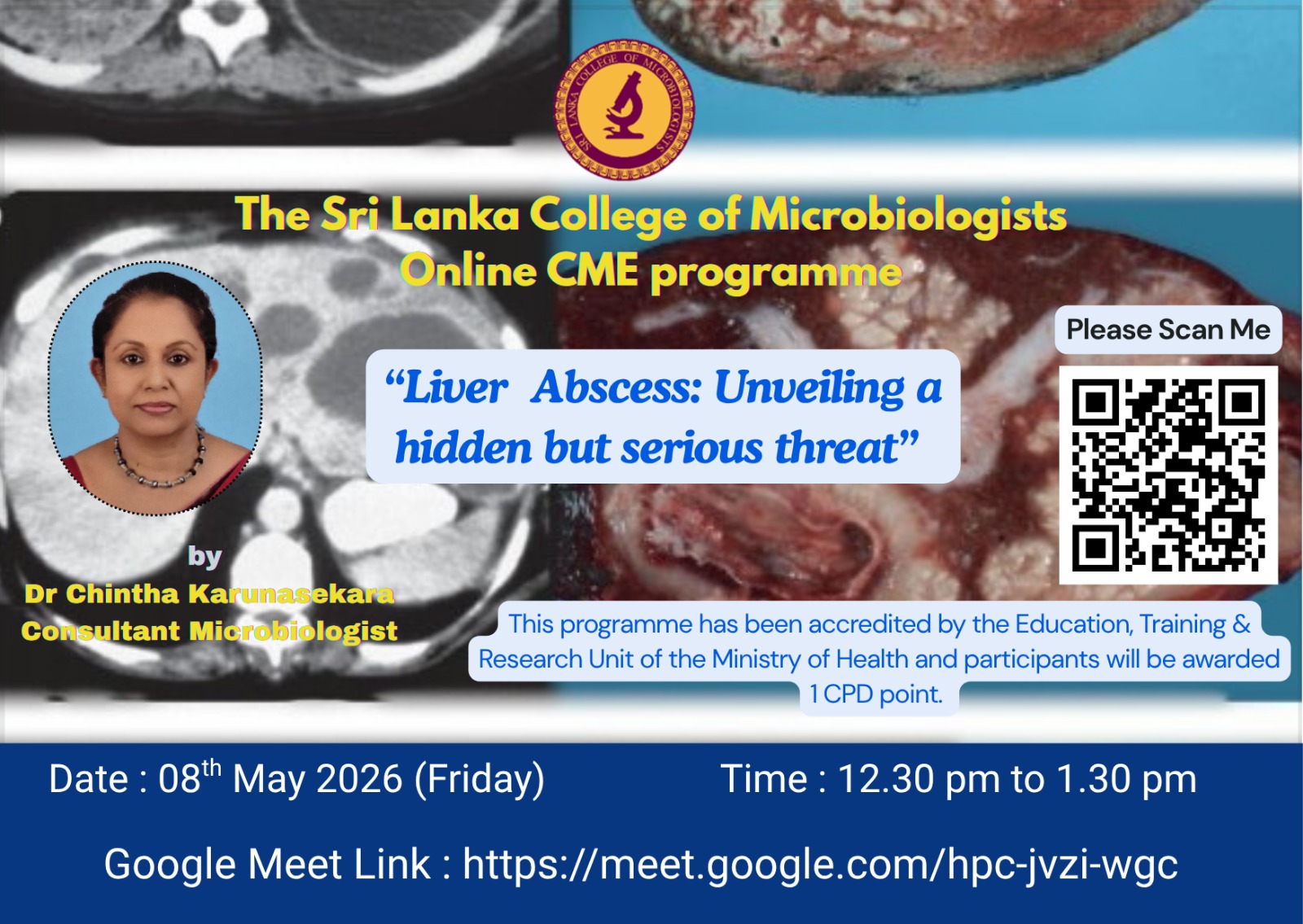
Date: 08th May 2026 (Friday)
Time: 12:30pm – 01:30pm
Google Meet link: https://meet.google.com/hpc-jvzi-wgc


In response to the COIVD-19 pandemic, countries across the world used short- or long-term school closures as a mean of reducing transmission of diseases in the community. The scientific evidence on the effectiveness of school closures in preventing transmission is scarce and show no significant impact although it needs to be analysed with local settings. The school closure as a way to prevent transmission is almost entirely based on influenza outbreaks, for which the transmission is mainly driven by children. As transmission dynamics are different with coronaviruses most importantly with COVID-19, the available information suggests that all measures need to be taken to reopen schools for in person learning while keeping with the health advice.
We, as a professional body involved in management of patients with COVID-19 and prevention of disease, prepared this guideline understanding the need of reopening schools for children as a priority. The purpose of this guideline is to support with reopening of schools as early as possible by creating a safe environment in school for in person learning during the COVID-19 pandemic. This guideline is based on best evidence available with modification to local settings. Existing evidence indicate opening of schools does not significantly increase community transmission if recommended advised is adhered. However, there is a possibility of outbreaks within the schools or increase in community transmission if health advised not followed adequately. This guideline aims to mitigate, not eliminate such occurrences and to keep schools open as the benefits of in-person schooling outweigh the risks.
The guideline mainly discuss on key points need to be implemented prior to opening the schools and strategies need to be implemented as routine practise to prevent ongoing transmission. We emphasise on need of adhering to multiple strategies as maintaining 6 feet physical distancing is not practical in local settings.
We consider vaccination as the mainstay of preventing transmission and kindly request all teachers and supportive staff to obtain vaccines if not already taken. We would like to recommend forthcoming teachers’ day as a special day dedicated for vaccinating school staff and their family members. The country has commenced on administrating vaccine for children above 12 years. As no country is currently giving vaccine for children less than 12 years, we suggest authorities to commence schooling for primary children as the first step. Not prioritising of primary school children is a concern for us since preference was given to older children sitting for main examinations. We kindly remind that commencing schools for primary children (year 1 and 2 as the first step) are equally important. In almost all schools primary grades are structurally and functionally independent in our settings, hence we do not believe this action interfere with opening of schools for exam grades to any extent. Moreover, we do not recommend waiting for vaccination of children to be completed prior to starting school for any grade and suggest implementing these guideline and to reopen schools as a timely need.
In this guideline we are discussing the importance of establishing below mentioned worldwide accepted preventive strategies, which we believe we can adhere in local settings.
We believe establishing these guidelines will mitigate occurrence of transmission of COVID-19 inside schools and help in reopening of schools as early as possible. We are happy to provide our expertise if further clarification is needed. As there is compelling scientific evidence that children are less likely than adults to acquire COVID‐19 and are potentially less likely to transmit it, we kindly request to take all attempt to reopen school as a priority.



Date: 08th May 2026 (Friday)
Time: 12:30pm – 01:30pm
Google Meet link: https://meet.google.com/hpc-jvzi-wgc

Department of Molecular Biology, Medical Research Institute, Colombo and Department of Zoology and Environmental Sciences, University of Colombo have conducted SARS CoV-2 variant analysis based on gene sequencing data generated by Oxford Nanopore gene sequencing method since July 2021. Read more →

In response to the COIVD-19 pandemic, countries across the world... Read more →

Firstly, we would like to bring the attention of the... Read more →

What is the time gap should be maintained between COVID-19... Read more →

Department of Molecular Biology, Medical Research Institute, Colombo and Department of Zoology and Environmental Sciences, University of Colombo have conducted SARS CoV-2 variant analysis based on gene sequencing data generated by Oxford Nanopore gene sequencing method since July 2021. Read more →
In response to the COIVD-19 pandemic, countries across the world... Read more →
Firstly, we would like to bring the attention of the... Read more →
What is the time gap should be maintained between COVID-19... Read more →
The Sri Lanka College of Microbiologists wishes to urge the... Read more →